
PSTN switch-off January 2027: what UK small businesses must check now
The UK’s old copper phone network closes on 31 January 2027. Openreach has said the date is fixed, and in September 2026 it said again that the deadline “remains unchanged” (Openreach, 24 September 2026).
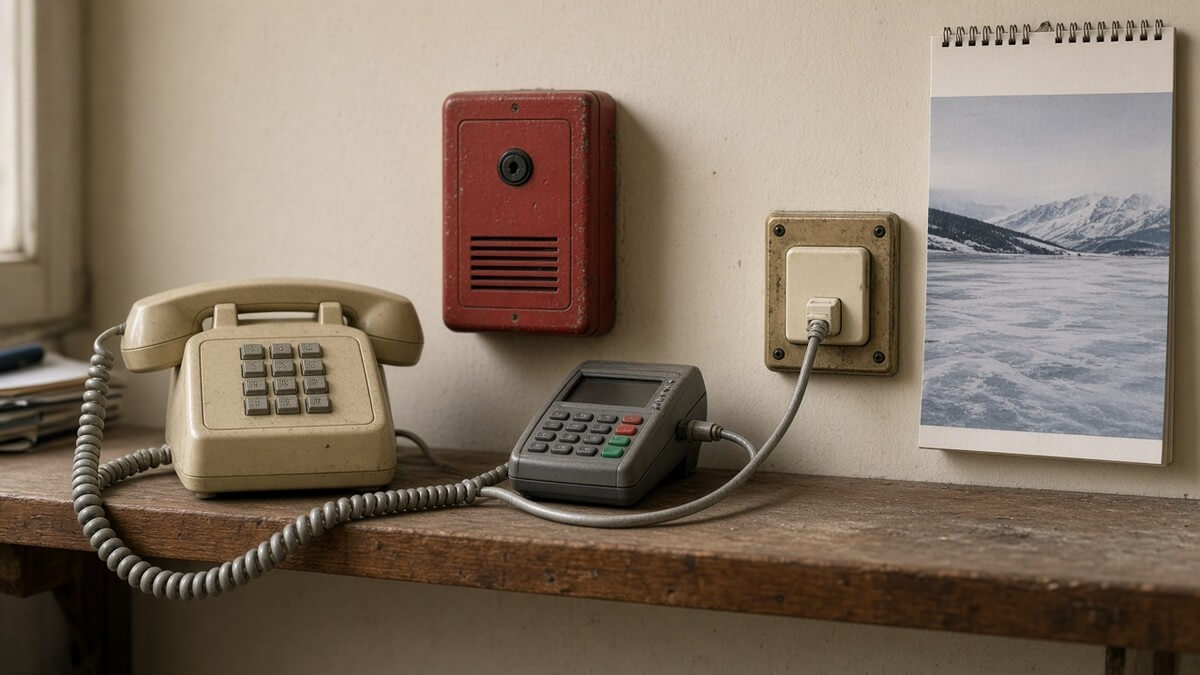
If your office phones already run over broadband, you may think you’re done. Maybe. The PSTN switch off catches out the things nobody thinks of as phones: the alarm panel in the cupboard, the lift line, the card machine that still dials out. Here’s what to check, and what to do about it.
What the PSTN switch-off is, and the date that matters
The Public Switched Telephone Network (PSTN) is the analogue system behind traditional landlines. BT Group is retiring it by 31 January 2027, and Openreach is withdrawing the products that run over it, grouped under the name Wholesale Line Rental, or WLR (Openreach, 5 February 2026).
The industry announced the move in November 2017 (GOV.UK), so this isn’t a surprise. What has changed is the time left: the date is 31 January 2027, and Openreach says it won’t move.
Openreach’s latest estimate, published on 24 September 2026, is that around 1.2 million lines are still on the old network, including around 350,000 business premises (Openreach). If yours is one of them, the PSTN switch off 2027 date is the one to plan around.
It’s not just your phones: what else in the office uses a copper line
GOV.UK’s guidance for businesses lists analogue phones, fire and other alarms, payment terminals, lifts, intercoms and broadband services among the things affected, and says you need to check whether anything relies on the PSTN or ISDN (GOV.UK).
A fuller list for a typical office:
- Intruder, fire and panic alarms that signal a monitoring centre over a phone line.
- Lift emergency phones. Openreach counted more than 12,000 lift lines still needing an upgrade in February 2026.
- Card machines that connect over a phone line rather than broadband or mobile.
- Door entry and intercom systems.
- Fax and franking machines.
- CCTV that dials out to report alerts.
- ISDN phone systems. The ISDN switch off is part of the same change: Openreach says the closure affects all services carried over copper lines, including ISDN (Openreach).
- ADSL and FTTC broadband. Openreach lists standard ADSL, Fibre to the Cabinet and G.fast as broadband products that could be hit, because they use copper for part of the connection (Openreach).
The quiet risk is the device installed years ago that just works. A lab freezer alarm that rings someone at 3am when the temperature climbs is a good example. Nobody looks at it until it fails to call.
A 30-minute audit you can do this week
Openreach suggests three steps: Review, Test, Switch (Openreach). Here’s the Review step in plain terms.
- Walk the building. Look for anything plugged into a phone socket on the wall. Follow the grey cables. Check the comms cupboard, reception, the lift and the alarm panel.
- Read your bills. Look for line rental, WLR, ISDN or “analogue line” charges. Each one is a line you need a plan for.
- List the numbers you rely on. Main number, direct dials, fax, alarm lines. Note which provider bills each one.
- Ask your suppliers. Email whoever maintains your alarm, lift, card terminals and door entry. Ask one question: “Does this work over a digital (IP) line, and if not, what’s the upgrade?” GOV.UK gives the same advice: ask the equipment supplier or manufacturer (GOV.UK).
For the Test step, Openreach says equipment can be tested for free at its test labs.
One warning. GOV.UK says your provider will contact you before migrating you, and you should be careful not to confuse that with marketing (GOV.UK). If a cold caller says you must sign a new contract today because of the switch-off, check with the company on your bill first.
Your options: full fibre, SOGEA and cloud phone systems (VoIP)
The digital landline switchover replaces analogue voice with calls carried over your internet connection. There are three building blocks.
Full fibre. Fibre all the way to your premises, with no copper in the line. Openreach says it is available to more than 23 million homes and businesses (Openreach Big Switch Off).
SOGEA. Short for Single Order Generic Ethernet Access. It’s broadband over your existing line without a separate phone service on top. Openreach names full fibre and SOGEA as the longer-term replacements (Openreach). If full fibre hasn’t reached your street, SOGEA is usually the next step.
Cloud phones (VoIP). Your phone system lives online instead of in a box on the wall. Handsets plug into the network, and staff can take calls on a laptop or mobile app too.
Keeping your numbers. In most cases you can move (port) your existing numbers to a new service. Confirm it with your provider before you cancel anything, because cancelling a line first can lose the number.
Questions worth asking your provider:
- Which of my lines are still on PSTN, WLR or ISDN?
- Can I keep every number, and what’s the porting date?
- Will my alarm, lift line and card machines work on the new service?
- What happens to my broadband during the change?
- What battery back-up comes with the router?
Power cuts and 999: the bit people forget
An old analogue phone drew power from the line, so it worked in a power cut. Digital lines need power. Openreach puts it bluntly: “Digital phone lines need power to work” (Openreach Big Switch Off).
Ofcom’s guidance says providers should offer at least one way for at-risk customers to reach emergency services during a power cut, for a minimum of one hour, free of charge to those who depend on their landline (Ofcom).
For a business, think beyond the phone on the desk. If your alarm signals over the internet, your router needs power too. Ask your alarm company and your provider what battery back-up covers, and for how long.
What happens if you miss the deadline
Openreach has a last-resort service called EVAc (Emergency Voice and Access Continuity). From 31 January 2027, lines that haven’t moved may be transferred to it, and where technically possible Openreach will keep linked broadband running (Openreach).
It is not an extension. Openreach describes EVAc as temporary, limited and more expensive than digital alternatives. It cannot be ordered in advance, capacity can’t be reserved, and it may not support the calling features you use today. Lines that can’t be moved to it will be ceased in tranches.
Openreach has also warned that businesses leaving migration to the final weeks risk avoidable disruption and higher costs. Wholesale prices for legacy lines have already risen in steps through 2026 (Openreach). Waiting costs money now, not just later.
Deadlines like this tend to arrive together. If you’re also tidying up old Windows 10 PCs, our guide to Windows 10 extended security updates covers that one.
How Cambition can help
We’ve been supporting small businesses since 2012 and have helped more than 250 clients. For the PSTN switch-off, that means going through the building with you, listing every line and device, and building a plan that moves things in the right order: numbers ported, alarms and card machines checked, broadband upgraded, battery back-up sorted.
We can set up broadband and cloud phones, or own the whole migration as part of managed IT. If you just want to know what a small office actually needs, see our small business IT support page.
Not sure what in your office still runs on a phone line? Book a short fit call and we’ll help you list it and plan the switch. Call 01223 656 156, email ambitious@cambition.co.uk, or use our contact page.
Frequently asked questions
When is the PSTN switch-off?
31 January 2027. Openreach says the date is unchanged and won’t be extended.
Will my business phone number change?
Usually not. Most numbers can be ported to a digital or cloud phone service. Confirm with your provider before you cancel any line.
Does the PSTN switch-off affect my broadband?
It can. ADSL, FTTC and G.fast broadband use copper for part of the connection. Full fibre or SOGEA are the long-term replacements.
What happens if I haven’t switched by the deadline?
Your line may be moved to Openreach’s EVAc service. It’s temporary, limited, more expensive and can’t be booked in advance. It isn’t an extension.
© CAMBITION I.T. Services Ltd
Head Office
Unit 7, Church Meadows, Haslingfield Road, Barrington, Cambridgeshire, CB22 7RG
VAT# 136 186 313 · Registered in the UK # 808 4429
View Privacy / Data Protection / Cookie Statement · Terms
PSTN switch-off January 2027: what UK small businesses must check now
The UK’s old copper phone network closes on 31 January 2027. Openreach has said the date is fixed, and in September 2026 it said again that the deadline “remains unchanged” (Openreach, 24 September 2026).
If your office phones already run over broadband, you may think you’re done. Maybe. The PSTN switch off catches out the things nobody thinks of as phones: the alarm panel in the cupboard, the lift line, the card machine that still dials out. Here’s what to check, and what to do about it.
What the PSTN switch-off is, and the date that matters
The Public Switched Telephone Network (PSTN) is the analogue system behind traditional landlines. BT Group is retiring it by 31 January 2027, and Openreach is withdrawing the products that run over it, grouped under the name Wholesale Line Rental, or WLR (Openreach, 5 February 2026).
The industry announced the move in November 2017 (GOV.UK), so this isn’t a surprise. What has changed is the time left: the date is 31 January 2027, and Openreach says it won’t move.
Openreach’s latest estimate, published on 24 September 2026, is that around 1.2 million lines are still on the old network, including around 350,000 business premises (Openreach). If yours is one of them, the PSTN switch off 2027 date is the one to plan around.
It’s not just your phones: what else in the office uses a copper line
GOV.UK’s guidance for businesses lists analogue phones, fire and other alarms, payment terminals, lifts, intercoms and broadband services among the things affected, and says you need to check whether anything relies on the PSTN or ISDN (GOV.UK).
A fuller list for a typical office:
- Intruder, fire and panic alarms that signal a monitoring centre over a phone line.
- Lift emergency phones. Openreach counted more than 12,000 lift lines still needing an upgrade in February 2026.
- Card machines that connect over a phone line rather than broadband or mobile.
- Door entry and intercom systems.
- Fax and franking machines.
- CCTV that dials out to report alerts.
- ISDN phone systems. The ISDN switch off is part of the same change: Openreach says the closure affects all services carried over copper lines, including ISDN (Openreach).
- ADSL and FTTC broadband. Openreach lists standard ADSL, Fibre to the Cabinet and G.fast as broadband products that could be hit, because they use copper for part of the connection (Openreach).
The quiet risk is the device installed years ago that just works. A lab freezer alarm that rings someone at 3am when the temperature climbs is a good example. Nobody looks at it until it fails to call.
A 30-minute audit you can do this week
Openreach suggests three steps: Review, Test, Switch (Openreach). Here’s the Review step in plain terms.
- Walk the building. Look for anything plugged into a phone socket on the wall. Follow the grey cables. Check the comms cupboard, reception, the lift and the alarm panel.
- Read your bills. Look for line rental, WLR, ISDN or “analogue line” charges. Each one is a line you need a plan for.
- List the numbers you rely on. Main number, direct dials, fax, alarm lines. Note which provider bills each one.
- Ask your suppliers. Email whoever maintains your alarm, lift, card terminals and door entry. Ask one question: “Does this work over a digital (IP) line, and if not, what’s the upgrade?” GOV.UK gives the same advice: ask the equipment supplier or manufacturer (GOV.UK).
For the Test step, Openreach says equipment can be tested for free at its test labs.
One warning. GOV.UK says your provider will contact you before migrating you, and you should be careful not to confuse that with marketing (GOV.UK). If a cold caller says you must sign a new contract today because of the switch-off, check with the company on your bill first.
Your options: full fibre, SOGEA and cloud phone systems (VoIP)
The digital landline switchover replaces analogue voice with calls carried over your internet connection. There are three building blocks.
Full fibre. Fibre all the way to your premises, with no copper in the line. Openreach says it is available to more than 23 million homes and businesses (Openreach Big Switch Off).
SOGEA. Short for Single Order Generic Ethernet Access. It’s broadband over your existing line without a separate phone service on top. Openreach names full fibre and SOGEA as the longer-term replacements (Openreach). If full fibre hasn’t reached your street, SOGEA is usually the next step.
Cloud phones (VoIP). Your phone system lives online instead of in a box on the wall. Handsets plug into the network, and staff can take calls on a laptop or mobile app too.
Keeping your numbers. In most cases you can move (port) your existing numbers to a new service. Confirm it with your provider before you cancel anything, because cancelling a line first can lose the number.
Questions worth asking your provider:
- Which of my lines are still on PSTN, WLR or ISDN?
- Can I keep every number, and what’s the porting date?
- Will my alarm, lift line and card machines work on the new service?
- What happens to my broadband during the change?
- What battery back-up comes with the router?
Power cuts and 999: the bit people forget
An old analogue phone drew power from the line, so it worked in a power cut. Digital lines need power. Openreach puts it bluntly: “Digital phone lines need power to work” (Openreach Big Switch Off).
Ofcom’s guidance says providers should offer at least one way for at-risk customers to reach emergency services during a power cut, for a minimum of one hour, free of charge to those who depend on their landline (Ofcom).
For a business, think beyond the phone on the desk. If your alarm signals over the internet, your router needs power too. Ask your alarm company and your provider what battery back-up covers, and for how long.
What happens if you miss the deadline
Openreach has a last-resort service called EVAc (Emergency Voice and Access Continuity). From 31 January 2027, lines that haven’t moved may be transferred to it, and where technically possible Openreach will keep linked broadband running (Openreach).
It is not an extension. Openreach describes EVAc as temporary, limited and more expensive than digital alternatives. It cannot be ordered in advance, capacity can’t be reserved, and it may not support the calling features you use today. Lines that can’t be moved to it will be ceased in tranches.
Openreach has also warned that businesses leaving migration to the final weeks risk avoidable disruption and higher costs. Wholesale prices for legacy lines have already risen in steps through 2026 (Openreach). Waiting costs money now, not just later.
Deadlines like this tend to arrive together. If you’re also tidying up old Windows 10 PCs, our guide to Windows 10 extended security updates covers that one.
How Cambition can help
We’ve been supporting small businesses since 2012 and have helped more than 250 clients. For the PSTN switch-off, that means going through the building with you, listing every line and device, and building a plan that moves things in the right order: numbers ported, alarms and card machines checked, broadband upgraded, battery back-up sorted.
We can set up broadband and cloud phones, or own the whole migration as part of managed IT. If you just want to know what a small office actually needs, see our small business IT support page.
Not sure what in your office still runs on a phone line? Book a short fit call and we’ll help you list it and plan the switch. Call 01223 656 156, email ambitious@cambition.co.uk, or use our contact page.
Frequently asked questions
When is the PSTN switch-off?
31 January 2027. Openreach says the date is unchanged and won’t be extended.
Will my business phone number change?
Usually not. Most numbers can be ported to a digital or cloud phone service. Confirm with your provider before you cancel any line.
Does the PSTN switch-off affect my broadband?
It can. ADSL, FTTC and G.fast broadband use copper for part of the connection. Full fibre or SOGEA are the long-term replacements.
What happens if I haven’t switched by the deadline?
Your line may be moved to Openreach’s EVAc service. It’s temporary, limited, more expensive and can’t be booked in advance. It isn’t an extension.
© CAMBITION I.T. Services Ltd
Head Office
Unit 7, Church Meadows, Haslingfield Road, Barrington, Cambridgeshire, CB22 7RG
VAT# 136 186 313 · Registered in the UK # 808 4429
View Privacy / Data Protection / Cookie Statement · Terms